Tips for Managing Varicose Veins
Varicose veins develop when the valves inside your veins weaken and stop working correctly, allowing blood to pool instead of flowing back toward the heart. This pooling causes veins to enlarge and twist, often appearing blue or purple beneath the skin of the legs; the visible bulging is a hallmark sign of varicose veins. For many patients, these veins cause aching and swelling that can interfere with standing, walking, and sleeping. Here are some ways to manage the symptoms of varicose veins in daily life:
Staying Active
Regular movement supports healthy blood flow in the legs, and consistent activity may reduce the pressure that builds up in weakened veins. Walking is one low-impact option that uses the calf muscles to push blood upward with each step. You do not need intense workouts to improve your circulation.
Sitting or standing for long stretches can worsen varicose veins, so building short breaks into your routine is a useful habit. When you take a short walk every hour, you keep circulation moving and give your legs a rest from prolonged strain. Simple movements you can do at your desk to help maintain steady blood flow include:
- Gentle stretches to loosen tight muscles
- Ankle rolls to encourage circulation in the lower legs
- Calf raises to activate the muscles that support blood flow back to the heart
Elevating the Legs
Raising your legs above the level of your heart helps blood return more easily; this position uses gravity to your advantage. Many people find relief by resting with their feet propped on pillows multiple times a day. Doing this a few times a day can ease the heaviness that builds up after hours of activity. Elevation works well in the evening because that is when swelling and discomfort often peak. Keeping the practice consistent tends to produce better results than doing it only occasionally.
Wearing Compression Stockings
Compression stockings apply gentle, graduated pressure to the legs, and this pressure is strongest at the ankle and lighter toward the top. The design encourages blood to move upward instead of collecting in the lower legs. Many patients wear them during the day when they are on their feet the most.
These garments come in different lengths and compression strengths; the various versions help individuals match them to their needs. Fit matters because a stocking that is too loose may not help, and ones that are too tight sometimes feel uncomfortable. A vascular specialist can measure your legs and recommend the correct size and pressure level for your situation.
Reviewing Treatment Options
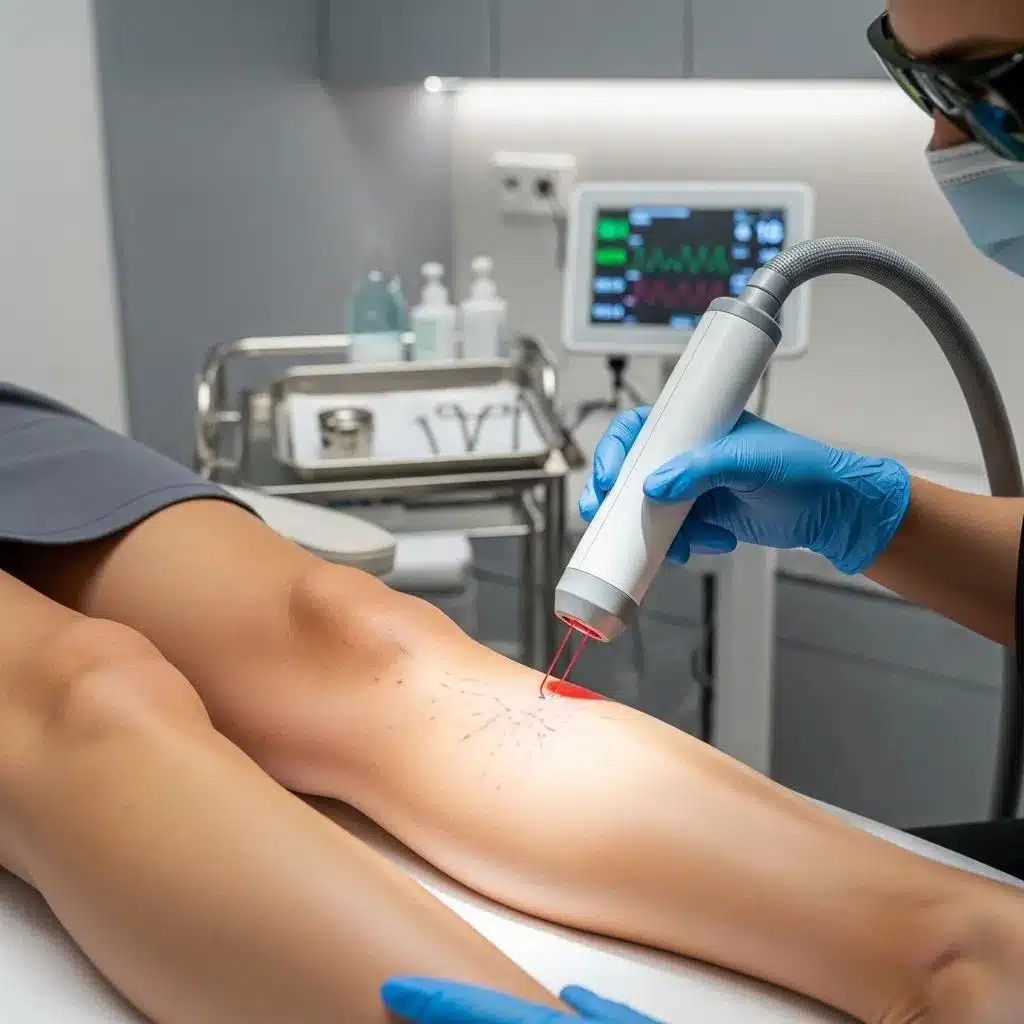
When lifestyle measures alone do not achieve sufficient results, medical procedures may be worth discussing with a specialist. Two commonly used options are sclerotherapy and endovenous laser therapy:
- Sclerotherapy involves injecting a solution directly into the affected vein, which causes the vein to close and fade over time.
- Endovenous laser therapy uses laser energy delivered through a thin fiber to seal a larger vein from the inside.
Both treatments are permanent, but new veins can still form over time.
Manage and Treat Varicose Veins
Managing varicose veins often starts with everyday habits such as staying active, elevating your legs, and wearing well-fitting compression stockings. You can also support vein health by quitting smoking; tobacco use affects circulation and sometimes contributes to vein problems over time. If you want to learn more about treatment or management techniques for varicose veins, consult a vascular specialist near you.